Sewing Machine Needle Size, Fabric Weight & Heat Press Guide
Eliminate skipped stitches and puckered seams by matching needle gauge, point shape, thread weight and rotary blade size to your project.
When a sewing machine suddenly skips stitches, shreds top thread or puckers knit seams, adjusting tension dials rarely fixes the root cause. Nine times out of ten, the culprit is a dull needle or a needle point shape mismatched to the fabric weave.
Decoding sewing needle gauges and point shapes
Every domestic home machine needle (130/705 H flat-shank system) carries two size numbers, European metric followed by US sizing, plus a point geometry engineered for specific fibers:
| Fabric Weight & Structure | Needle Size (Metric/US) | Required Point Type | Baseline Stitch Length |
|---|---|---|---|
| Silk, Chiffon, Organza | 65/9 to 70/10 | Microtex / Sharp | 2.0 mm |
| Quilting Cotton, Linen, Poplin | 80/12 | Universal | 2.5 mm |
| Knit Jersey, Ribbing, Spandex | 75/11 to 80/12 | Ballpoint / Stretch | 2.5 mm narrow zigzag or serger |
| Mid-Heavy Denim, Twill, Canvas | 90/14 to 100/16 | Jeans / Denim | 3.0 to 3.5 mm |
| Genuine Leather, Heavy Vinyl | 100/16 to 110/18 | Leather (wedge cut) | 3.5 to 4.0 mm |
Look up exact fabric, thread weight and transfer pairings interactively in our free Sewing Needle & Heat Press Lookup Tool.
Heavy-duty mechanical machines versus overlock sergers
Home studios often weigh whether to upgrade their primary machine or add a dedicated serger: - Heavy-duty interior metal-frame sewing machines handle straight stitching, topstitching, zippers, buttonholes and layered canvas/denim hems without frame flex. Compare motor speeds (SPM) and presser foot lift in our heavy-duty sewing machine comparison. - 3-thread and 4-thread sergers trim raw seam allowances, overcast edges and stitch stretchy knit seams in one pass using differential feed to stop wavy lettuce hems. Check threading layouts in our serger sewing machine guide.
Rotary cutter blade sizing and self-healing mats
Matching rotary blade diameter to fabric stack height protects both your hand ergonomics and mat surface: - 28 mm blade: Intricate quilt curves, doll clothes and tight pattern notches on compact 12 x 18 in mats. - 45 mm blade: Standard studio workhorse for quilting cotton and apparel patterns (2 to 6 layers) on 18 x 24 in or 24 x 36 in mats. - 60 mm blade: Heavy fleece, batting, denim and upholstery stacks (6 to 8 layers) with straight ruler cuts.
Heat press transfer material baseline
Before selecting a clamshell or swing-away press in our heat press machine guide, match platen size and maximum wattage to your transfer method: 1. Standard PU HTV (cotton/poly blends): ~305 F (152 C), 10 to 15 seconds, medium pressure. 2. DTF (Direct-to-Film) transfers: ~310 F (154 C), 12 to 15 seconds, medium-firm pressure, cold peel plus brief repress. 3. Sublimation (100% polyester or coated blanks only): ~400 F (204 C), 45 to 60 seconds, light-medium pressure.
Sewing & craft studio FAQ
What do the two numbers on a sewing machine needle like 90/14 mean?
The first number is the European metric shaft diameter in hundredths of a millimeter (90 = 0.90 mm), and the second is the US size number (14). Higher numbers indicate thicker, stiffer needles for denser fabrics.
Why does a universal needle skip stitches on T-shirt jersey or spandex?
Universal points can pierce elastic knit fibers or push loops down into the throat plate. A ballpoint or stretch needle uses a rounded tip and contoured scarf that slides cleanly between knit loops.
How often should you replace a sewing machine needle?
Change needles after roughly 6 to 8 hours of active sewing, after hitting a pin, or whenever you start a fresh garment project. Microscopic burrs snag delicate fabrics long before the needle bends visibly.
Can sublimation paper transfer onto 100% cotton T-shirts?
No. Sublimation dye gas bonds chemically only with polyester fibers or polymer-coated blanks at around 400 F. For 100% cotton garments, use PU heat transfer vinyl (HTV) or Direct-to-Film (DTF) transfers.
More sewing & studio guides
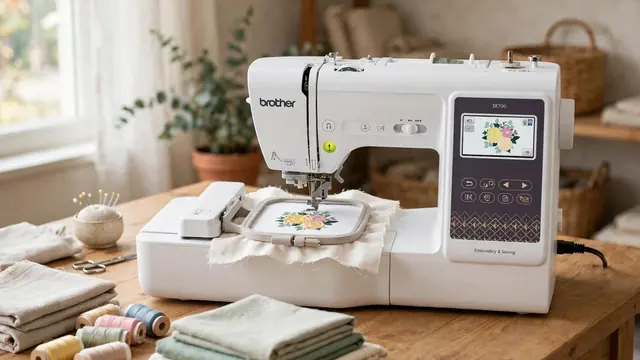 Sewing Machines5 Best Embroidery Machine for Beginners Picks (2026)Compare hoop dimensions, wireless design transfer, stitch counts, and metal frame builds to select the right starter embroidery machine.Read
 Sewing MachinesBest Heavy Duty Sewing Machine Picks (2026)Compare metal frame construction, motor power, and stitch versatility to find the right sewing machine for denim, canvas, and home crafts.Read
 SergersBest Serger Sewing Machine Picks (2026)Compare metal frame construction, thread options, and differential feed controls to choose the right serger for garment finishes.Read
 Heat PressesBest Heat Press Machine Picks (2026)Compare platen dimensions, heating systems, and swing away designs to select the right heat press machine for shirts, totes, and crafts.Read